
东野圭吾推理系列
3대 메가프로젝트 맞춰 재생에너지 발전 용량… 2040년 220GW 추진_我的网站

一 | 원전 9기 분량 매년 새로 지어야 국민일보DB 정부가 2040년 재생에너지 설비 용량을 220기가와트(GW)까지 늘리겠다는 구상을 발표했다. 호남 반도체 클러스터를 비롯한 3대 메가프로젝트 사업으로 폭증할 전력 수요에 대응한다는 취지다. 그러나 계획이 현실이 되려면 재생에너지 설비가 매년 12GW 넘게 증가해야 한다. 1.4GW급 대형 원전 약 8~9기 분량의 설비를 해마다 새로 지어야 해 실효성 논란도 제기된다. 기후에너지환경부와 제12차 전력수급기본계획(전기본) 수립 총괄위원회는 26일 서울 여의도 한국전력공사 남서울본부에서 제6차 대국민 정책토론회를 열고 이런 내용의 정부 보급 목표와 전망치를 공개했다. 전기본 수립 총괄위는 재생에너지 설비가 2030년 100GW, 2035년 163GW로 정부 목표를 달성하고 2040년 220GW에 도달할 것으로 추산했다. 이는 사업용 태양광 등만 감안한 숫자다. 전력시장에 잡히지 않는 자가용 태양광까지 포함하면 2040년 236GW까지 치솟을 것으로 봤다. 총괄위 소속 조상민 한국공학대 교수는 “재생에너지 시장 잠재력과 신규 프로젝트 등을 기반으로 전망했다”고 설명했다. 정부의 구상은 태양광이 초기 보급을 견인하고 풍력발전이 뒤를 받치는 형태다. 사업용 태양광은 현행 31GW에서 2040년 155.3GW까지 확대될 전망이다. 인허가에 시간이 걸리는 육상·해상풍력발전은 현재 각각 2.1GW, 0.4GW에 불과하지만, 2040년엔 각각 15.5GW와 45.0GW로 급증할 것으로 예상했다. 조 교수는 “정부가 재생에너지 대전환에 정책 역량을 집중하는 점을 반영했다”고 말했다. 장밋빛 숫자의 이면엔 난제도 산적해 있다. 먼저 2030년 재생에너지 100GW 보급 목표조차 달성이 불투명한 상황에서 이를 10년간 배로 늘려야 한다. 김은성 사단법인 넥스트 부대표는 “220GW는 전망이라기보다 이상적인 목표 수치”라고 지적했다. 폭증할 발전량에 맞춰 송배전망도 대거 확충해야 한다. 곽영주 대한태양광발전사업자협회 회장은 “현장에선 태양광 발전소들이 계통이 없어 출력 정지를 당하고 생산된 전기를 버리고 있다”고 말했다. 정부는 이격거리 규제가 없는 태양광 사업을 확대해 보급 시기를 약 3.6년 앞당기고, 인허가 단축과 에너지저장장치(ESS) 확충도 병행할 계획이다.。
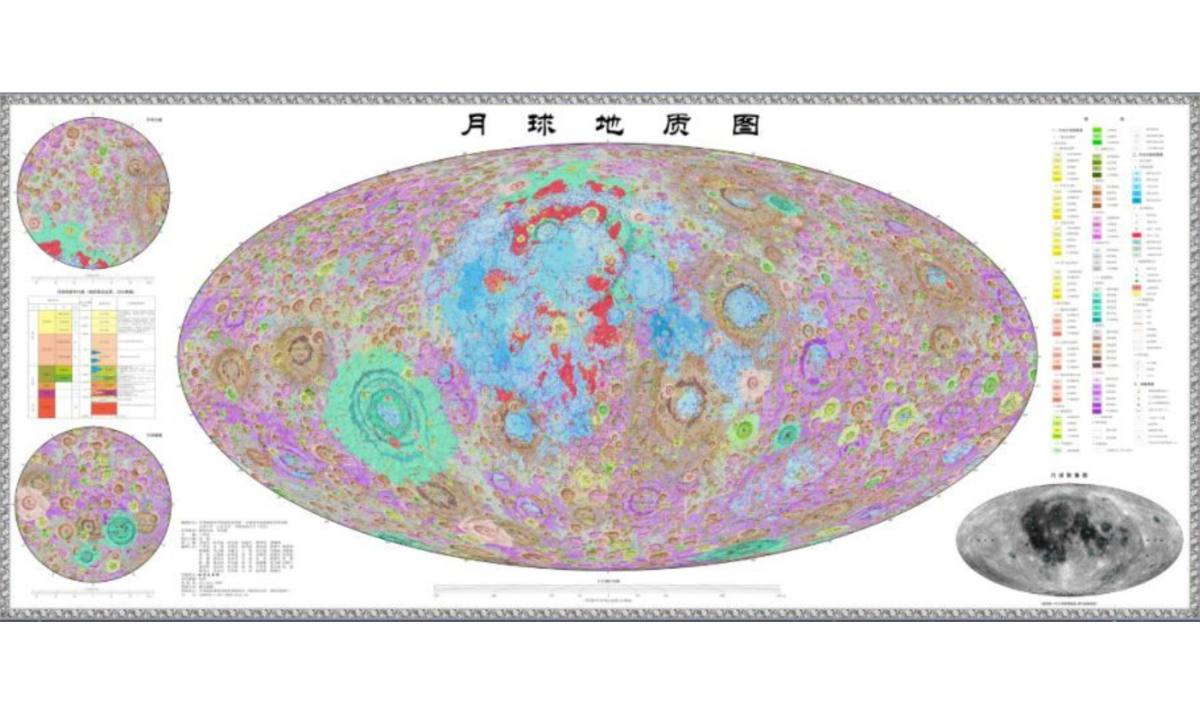
Using the latest data from the Chang'e lunar exploration program and other lunar exploration efforts, Chinese scientists have completed a 1:5,000,000 geological map of the entire moon, for the first time providing a more detailed global classification of the moon's late-stage geological layers and key scientific support for China's future lunar research station, landing site selection and deep-space exploration, while contributing to humanity's exploration on the Solar System's evolution, the Xinhua News Agency reported on Thursday.
Measuring approximately 280 centimeters in length and 120 centimeters in height, the lunar geological map includes detailed maps of the moon's polar regions, precisely identifying over 13,000 impact craters and 81 basins, while classifying 14 geological structure types and 17 rock types.
According to the map's compiling team from the Institute of Geology, Chinese Academy of Geological Sciences, the map has achieved systematic innovations in three key areas, based on the latest exploration data from the Chang'e lunar exploration program and other missions, and balancing scientific accuracy and accessibility.
The map updates the moon's geological timescale, revising the starting ages of key periods. The starting ages of the Aitkenian Period and the Nectarian Period have been adjusted to 4.33 billion years and 4.17 billion years, respectively, while the starting age of the Imbrian Period has been slightly revised to 3.92 billion years. This map for the first time provides a more detailed global classification of the moon's late-stage geological layers.
The map also updates the moon's material inventory with high-resolution mineral distribution data and improved rock classifications. Findings from the Chang'e-4 and Chang'e-6 missions led to the identification of gabbronorite in the South Pole-Aitken (SPA) Basin, offering new insights into the moon's deep interior.
The map introduces a customized visualization system for its 1:5,000,000 scale. To meet the requirements of the 1:5,000,000-scale mapping, researchers established differentiated minimum representation scales for various geological features. This ensures that the large-scale map maintains overall readability while preserving key geological characteristics of major scientific significance.
According to Yang Zhiming, director of Institute of Geology, the newly released lunar geological map will support China's future lunar research station, landing site selection, and deep-space exploration, while contributing new Chinese insights into the study of Solar System evolution.
Global Times
。
Current article:http://teemw.laonenpeidiebenhuaiyunnangshi.cfd/news/20260826_495.html
Published on:00:00:00